Hit a deer in North Carolina? What to do next
Deer crashes in North Carolina peak in November. Here's what to do if you hit one, when the law says to report it, how insurance usually treats it, and what the repair involves.
The short answer
Pull over somewhere safe, turn on your hazards, stay away from the deer and call 911 if anyone is hurt or the road is blocked. If the crash causes an injury or $1,000 or more in damage, North Carolina law requires reporting it to police. Photograph the damage before washing the car, then call your insurer. Hitting a deer is usually a comprehensive claim.
Drive in North Carolina long enough and you'll have a close call with a deer. This time of year, the odds of more than a close call go up sharply. Here's what the state's own numbers show, what to do if it happens to you, how insurance usually handles it, and what the repair tends to involve.
Why November is the worst month
The NC Department of Transportation tracks crashes that officers flag as involving an animal. Its latest report, published in July 2026, counted 65,470 animal-related crashes statewide from 2023 through 2025, or roughly 25,500 to 26,100 a year. The crash report form doesn't record the type of animal, but NCDOT says its analysis shows about 90 percent involve deer.
The timing is lopsided. Over those three years:
- November alone had 15,432 animal crashes, about 24 percent of the total and far more than any other month.
- October, November and December together accounted for just over half of all animal crashes.
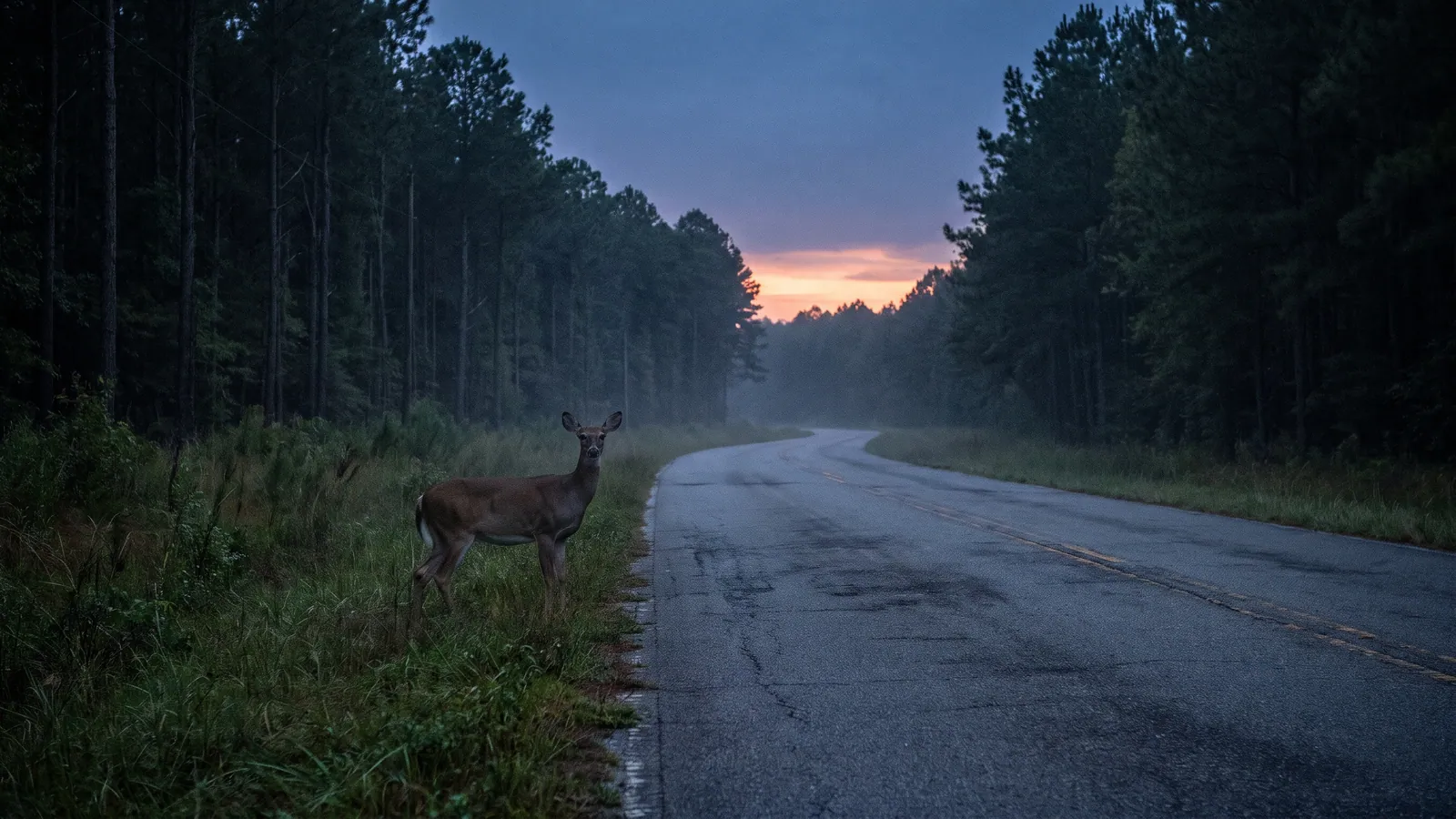
- More than half happened in two windows: early morning from 5 to 8 a.m., and evening from 6 to 10 p.m.
NCDOT ties the fall peak to mating and hunting seasons, when deer move around more. With clocks back on standard time, more of the evening commute now falls in the dark, right in that evening window.
Statewide, those three years of animal crashes added up to 26 deaths, 2,919 injuries and an estimated $230.8 million in property damage.
Closer to home
Cumberland County had 712 animal crashes from 2023 through 2025, ranking 35th of North Carolina's 100 counties, with 45 injuries and about $2.1 million in estimated property damage. Several neighboring counties rank much higher. Robeson County was 7th in the state with 1,568, and Sampson, Bladen and Harnett each had more than 1,100. If your drive takes you along two-lane roads through farmland and woods outside Fayetteville, slow down this time of year.
Right after the impact
Both NCDOT and the NC Department of Insurance warn against swerving. NCDOT notes that swerving can make you lose control and cause a more serious crash, and the Department of Insurance points out that it can put you into another car or off the road into a tree.
If a deer is in your path and you can't avoid it, the Department of Insurance's advice is to brake firmly and stay in your lane.
After the hit:
- Pull over somewhere safe and turn on your hazard lights. Move the car off the road if you can.
- Stay in the car until it's safe to get out. Watch for traffic, especially on a dark road.
- Leave the deer alone. NCDOT warns that a frightened or wounded deer can hurt you, or hurt itself further. Don't try to move it.
- Call 911 if anyone is hurt, if the deer or debris is blocking the road, or if the crash needs to be reported, which is covered next.
Do you have to report hitting a deer?
Often, yes. North Carolina law defines a crash as any event that causes injury or property damage due to the motion of a motor vehicle. It doesn't matter that the other party was a deer. If anyone is injured, or the total property damage is $1,000 or more, it's a "reportable crash," and the driver has to notify law enforcement immediately.
That bar is not hard to reach. Across NCDOT's three years of reported animal crashes, estimated property damage averaged roughly $3,500 per crash. Those figures only include crashes that were reported, but they give you a sense of scale.
Inside city or town limits, the local police department handles the report. Outside them, it's the State Highway Patrol or the county sheriff's office. A report also gives your insurer an official record of what happened. Our after-a-crash checklist for Fayetteville explains how to get a copy of the report from each agency.
Take pictures before you wash the car
The Department of Insurance suggests taking photos or video of the damage and any evidence of the deer before you clean anything. Insurers look for signs like hair or blood, which help show that an animal caused the damage. A few to get:
- All four sides of the car, plus close-ups of every damaged area
- The lower front end, where broken pieces may be hanging
- Any fluid on the ground under the car
- The spot where it happened, if you can photograph it safely
Then notify your insurance company promptly and send the documentation it asks for.
How insurance usually handles a deer strike
Every policy is different, so read yours or call your agent. In general terms, here is how the NC Department of Insurance describes it:
- Hitting the deer is usually a comprehensive claim. Comprehensive coverage, also called "other than collision," generally covers damage when your car hits a deer, and your comprehensive deductible applies.
- Swerving into something else is usually a collision claim. If you miss the deer but hit another vehicle or an object such as a tree, collision coverage applies instead, with its own deductible.
- Liability-only coverage won't pay for your car. Liability insurance pays for damage you're responsible for to other people's property. Without comprehensive, the repair to your own car is generally on you.
Once you have an estimate, compare it to your deductible before deciding whether to file. We work with all major insurance companies, and our insurance claims page explains how the process usually goes with us.
Is it safe to drive home?
Sometimes a deer leaves a cracked bumper and nothing else. Other times the damage is behind the grille, where you can't see it. Before you drive, look for:
- Coolant or other fluid dripping, or steam from under the hood
- A temperature gauge that starts climbing
- Broken headlights or headlights pointing at the ground, which is dangerous at night
- A hood that won't latch or has buckled
- Pieces dragging, or a tire rubbing against a bent panel
- New warning lights on the dash
If you see any of these, have the car towed. Driving with a damaged cooling system can overheat the engine and turn a body repair into a much bigger one.
What the repair usually involves
Most deer strikes hit the front of the car, and the damage tends to follow a pattern. From the outside in:
- Bumper cover, energy absorber and reinforcement bar. The plastic cover often cracks or tears, and the foam absorber and metal bar behind it can crush or bend.
- Grille and headlights. Both break easily, and headlight housings often lose their mounting tabs even when the lens looks fine.
- Hood and fenders. A deer that rolls onto the hood can dent or buckle it and push the fenders out of line.
- Radiator, A/C condenser and core support. These sit right behind the grille. A small leak in the condenser may not show up until the air conditioning stops blowing cold.
- Sensors and cameras. Many newer vehicles have radar units, cameras or parking sensors in the bumper or grille for features like adaptive cruise control and automatic braking. When they're disturbed or replaced, the manufacturer's procedures may call for calibration, so the repair plan should account for them.
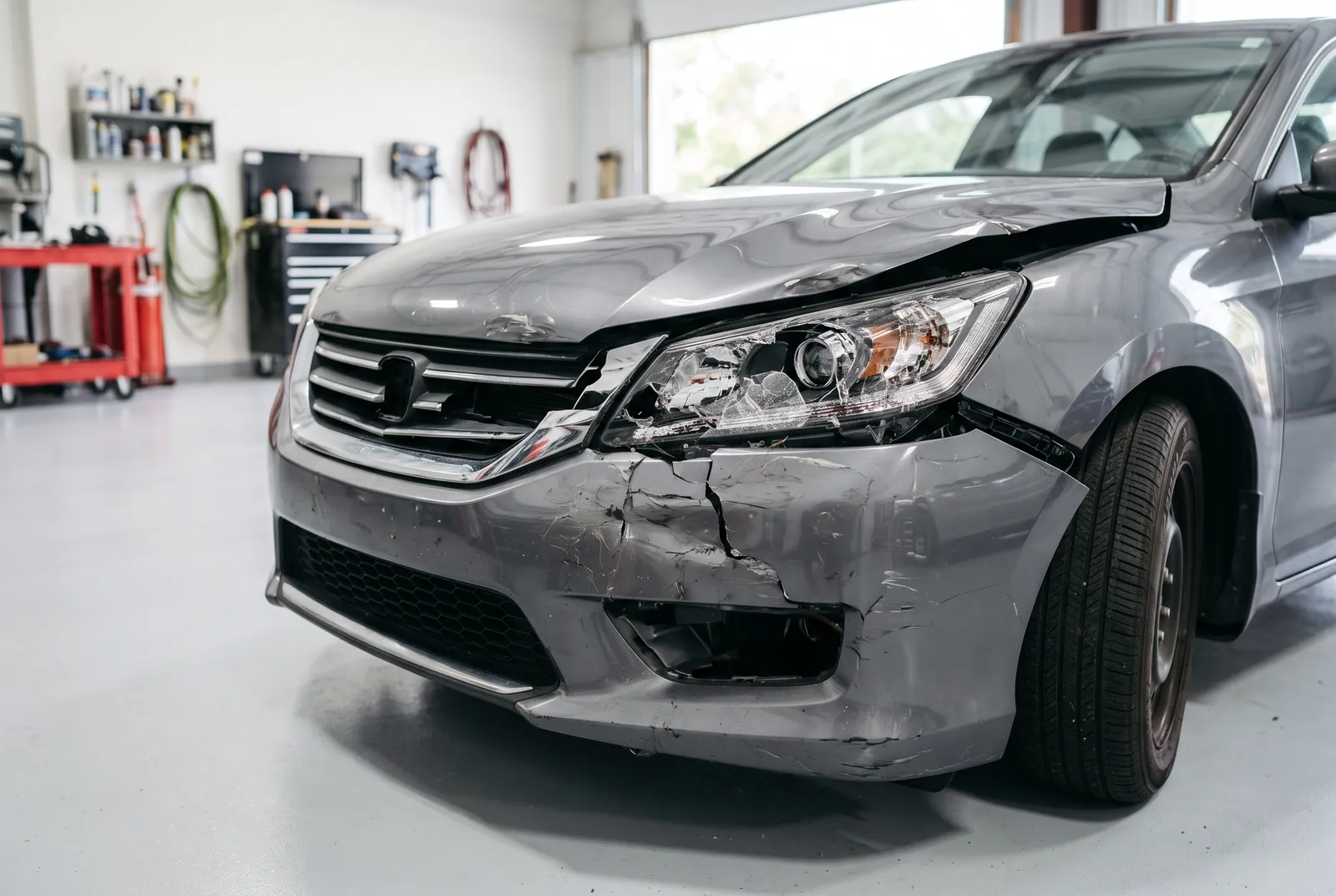
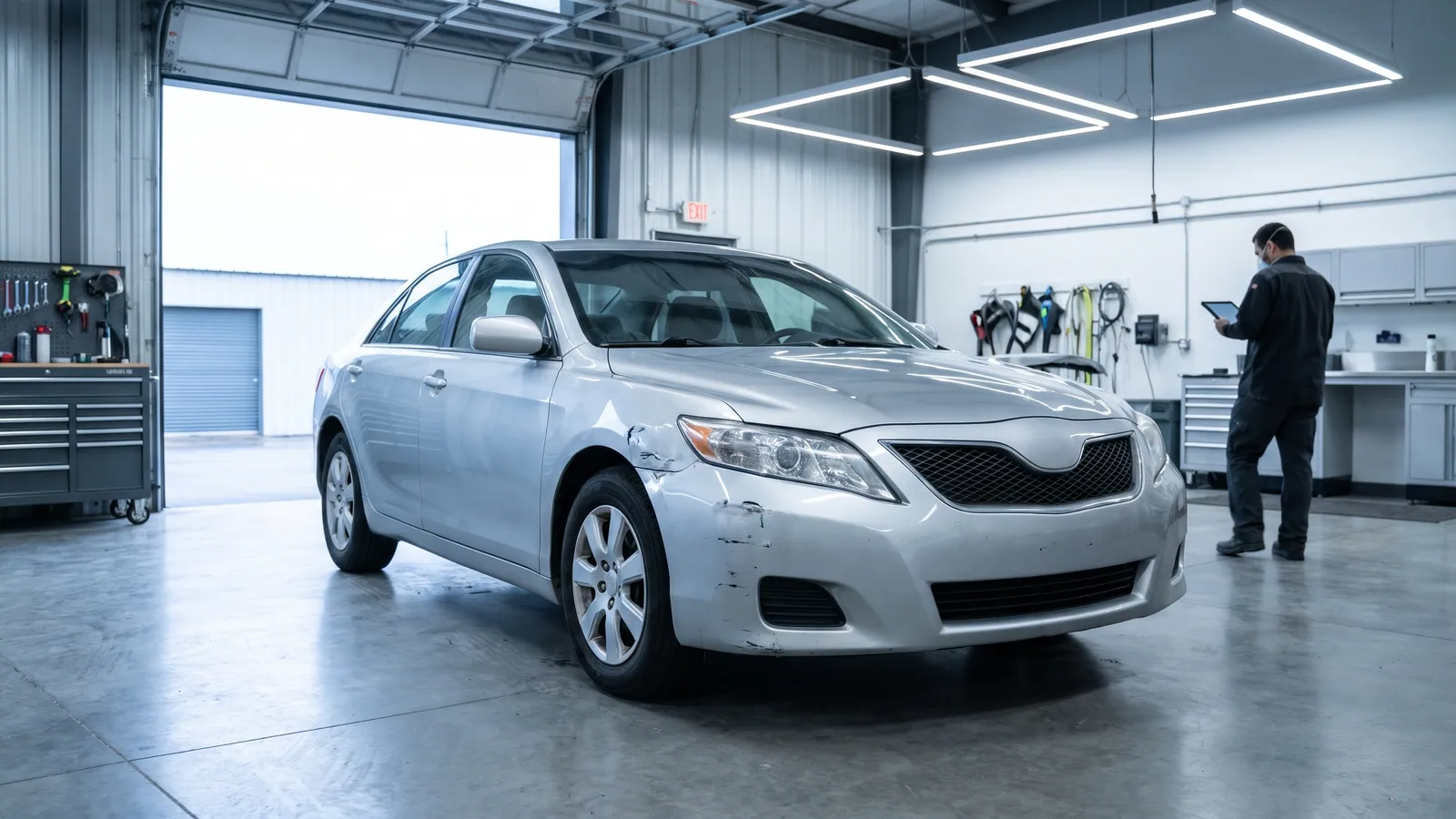
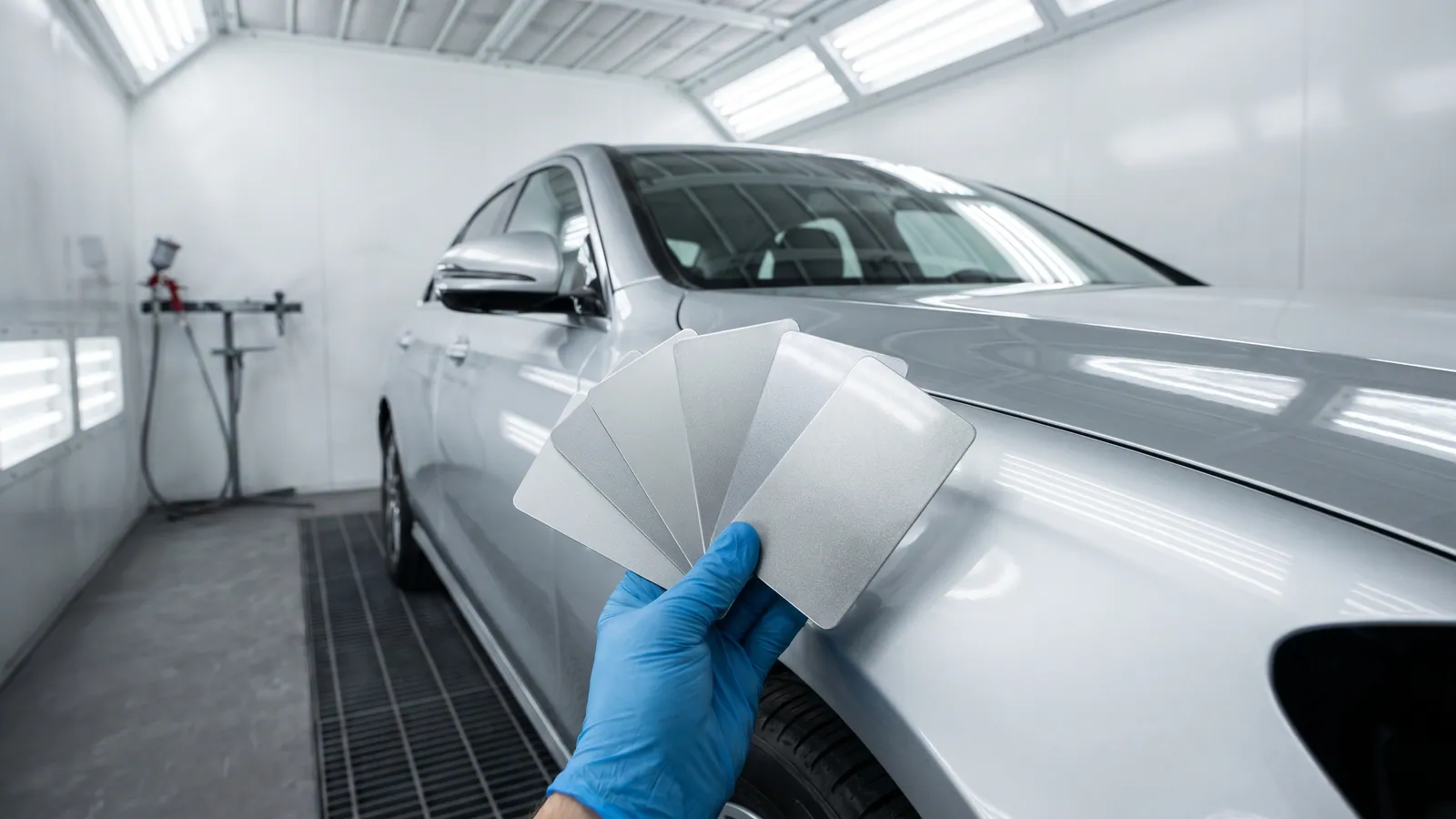
Because so much of the damage hides behind the bumper, the first estimate often grows once the front end comes apart. That's normal, and it's handled with a supplement to your claim. After the structural and mechanical repairs, new panels are painted and blended to match the rest of the car, which is where careful auto painting shows.
A glancing hit that leaves only a dent or scrape on a door or fender may be a simpler dent and scratch repair. If you'd like us to look at it, send photos through our free estimate form or call ahead at 910-309-8011.
Lowering your odds the rest of the season
NCDOT's advice for avoiding deer:
- Slow down in deer crossing zones and heavily wooded areas, especially in the late afternoon and evening.
- Pay extra attention near bridges and overpasses, railroad tracks, streams and ditches, where these crashes most often happen.
- Use your high beams when you can, and watch for eyes reflecting in your headlights.
- Expect more than one. Deer often travel in small herds.
- If you see a deer near the road, slow down and give one long blast of the horn.
- Leave extra following distance at night. If the car ahead hits a deer, you could be involved.
Questions
Will a deer claim put points on my North Carolina insurance?
According to the NC Department of Insurance, no insurance points are assigned for striking an animal, and a comprehensive claim for hitting a deer usually won't affect your premium. If you swerve and hit another vehicle or object instead, points could be assigned and your premium could go up. Your agent can tell you how this applies to your policy.
Which North Carolina counties have the most deer crashes?
In NCDOT's 2023 to 2025 data, Wake County had the most animal-related crashes with 2,836, followed by Guilford with 2,171 and Pitt with 1,900. Cumberland County had 712, ranking 35th of 100 counties. NCDOT estimates that about 90 percent of animal crashes involve deer.
What if the deer ran off after I hit it?
It's still a crash. Whether it has to be reported depends on injuries and the amount of damage, not on whether the animal is still there. Photograph the damage, including any hair or blood on the car, before you wash it, because insurers look for that evidence.
Is it worth filing a claim for minor deer damage?
It depends on the repair cost and your comprehensive deductible. Get an estimate first, then compare the two. Damage behind the bumper cover is easy to miss, so have the front end looked at before you decide. You can send photos for a free estimate.
Sources
- North Carolina Animal Related Crashes 2023-2025: County Rankings and Crash Data (NC Department of Transportation)
- Avoiding Collisions with Deer (NC Department of Transportation)
- The deer are out; here are some insurance, safety tips (NC Department of Insurance)
- G.S. 20-4.01: Definitions, including crash and reportable crash (North Carolina General Assembly)
- G.S. 20-166.1: Reports and investigations required in event of accident (North Carolina General Assembly)
Need it looked at?
Send a few photos for a free estimate from Kustom Shop, 5409 Bragg Blvd, Fayetteville, NC 28303. With or without insurance.