How auto paint matching works, and why new paint can look off
A repaired door that looks a shade off from the fender next to it is one of the most common body shop complaints. Here's why it happens, how a good shop prevents it, and what to look for before you drive away.
The short answer
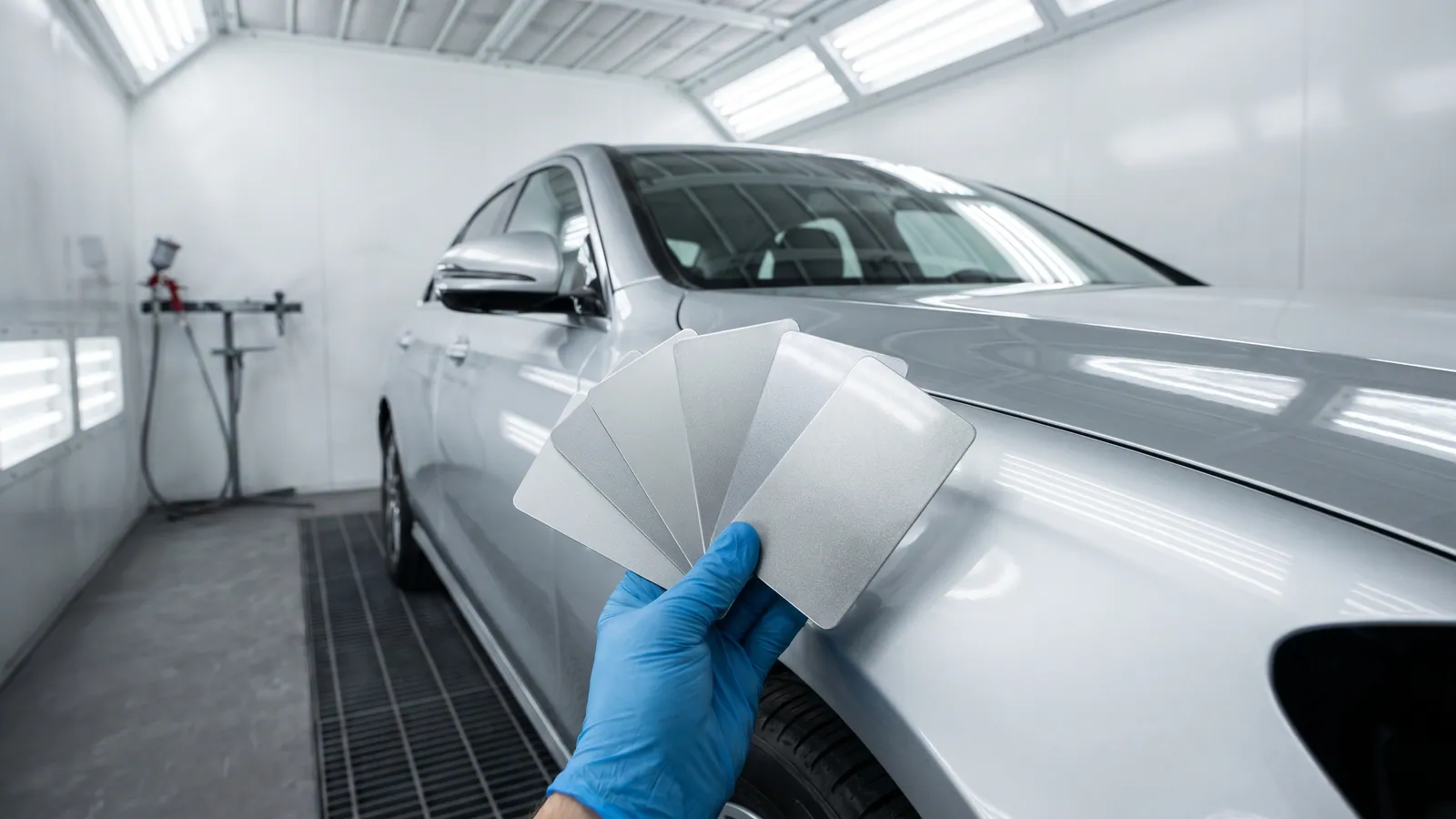
Shops start with the factory paint code, but the code alone often isn't enough because the same color varies between plants and paint weathers over time. A good painter checks the formula's variants against your car, sprays and clears a test card, judges it in daylight from several angles, tints if needed, then blends the color into the neighboring panels so your eye sees one color.
Most people never think about paint matching until a repaired door looks a little warmer or a little darker than the fender beside it. Matching is one of the hardest parts of body work to get right, and one of the easiest for you to check yourself. Here's what happens before the color ever reaches your car.
Why a repaired panel can look different
Your car's color isn't a single fixed recipe. I-CAR, the collision repair industry's training organization, lists several reasons a refinish color may not match the car in front of the painter:
- Small variations in how the automaker applied the paint at the factory
- The same color built at different plants, with paint from different suppliers
- Color variations the paint companies haven't identified yet
- Weathering of the original finish
- Panels that were repaired and repainted before
- Differences between the pigments automakers use and the ones available to body shops
I-CAR also points out that spray gun technique, mixing ratios, temperature and humidity can all shift how a color comes out. So the goal isn't to find "the" color. It's to match your car as it sits today.
Start with the factory paint code
Every car leaves the factory with a paint code, a short set of letters and numbers that identifies its color. Where it's printed depends on the make and year. Common spots include the driver's door or door jamb, the glove box, the trunk or spare tire area, the radiator support and under the hood.
One common mix-up: the VIN does not contain the paint code. The VIN identifies the vehicle, and the paint code identifies the color. If you can't find the label, a dealer's parts department can usually look up the original color from your VIN, or you can check the original paperwork.
If the car has been repainted at some point, the code tells you the color it left the factory in, not necessarily the color it wears now.
Why the code alone isn't enough
The code points the painter to a formula. Because the same color can come out differently from plant to plant, one code may have more than one formula. PPG's refinish procedures call these the prime color and its variants, and they have the painter check variant chips against the car and choose the closest one.
Even the best variant may not be close enough on a weathered or previously repaired car. That's when a painter tints, adding small amounts of toner to adjust the formula. I-CAR is clear on this point: blending can never take the place of tinting when the match is unacceptable. A good shop gets the color close first, then blends.
Spray-out cards come before the car
Once a formula is chosen, a careful painter tests it on a spray-out card before it touches your car. It's a small card sprayed with the actual mix, cleared, and held against the panel next to the repair.
How the card is made matters as much as the paint. PPG's spray-out procedure calls for:
- The same spray gun, technique and distance that will be used on the car. PPG warns that hand-holding the card can change the color if the technique doesn't match.
- Recording how many coats it took to cover, so the car gets the same build.
- Clear coat over the card before the color is judged.
- Checking in natural sunlight, ideally between 10 a.m. and 2 p.m., and in shade too. PPG says the shaded view matters as much as the sunlit one.
- Waiting before making the call: two to four hours for solid colors and eight hours or more for tri-coats.
The card also gets viewed from more than one angle. PPG's Custom Restoration Guide says to compare it head-on at 90 degrees and again at angles between 20 and 60 degrees.
Blending into the next panel
Even a near-perfect formula can leave a visible edge where new paint meets old. Blending solves that. I-CAR describes it as extending the basecoat color into an area or panel next to the repair so some of the original color shows through. Your eye reads one color instead of two.
Blending needs room. PPG's waterborne blending procedure calls for a blend area on adjacent panels of at least 12 inches for basecoat colors and at least 24 inches for tri-coat and quad-coat colors. That's why a dent in one door can mean paint work on the fender or the next door, too. If you're going through an insurance claim and the estimate lists panels that weren't damaged, ask the shop which ones are being blended and why.
Metallic, pearl and tri-coat colors
Solid colors are the most forgiving. Metallic and pearl colors change with the viewing angle, so a panel can match head-on and look lighter or darker from the side. That's why PPG has painters check spray-out cards at the face, flash and flop angles, and it calls face and flop the two most important.
Tri-coat colors go a step further. They're built in three layers: a ground coat, a translucent pearl or tinted midcoat, and clear. The number of midcoats changes the final color, so the painter needs to know how many it takes to match your car.
That's the job of a let-down panel. In PPG's version, the painter sprays the ground coat on a test panel, masks it off in horizontal sections, and applies midcoat one coat at a time, uncovering another section after each coat. The finished panel has sections carrying one to five midcoats. Clear goes on half of it to show the differences, and the painter holds it against the car to find the match.
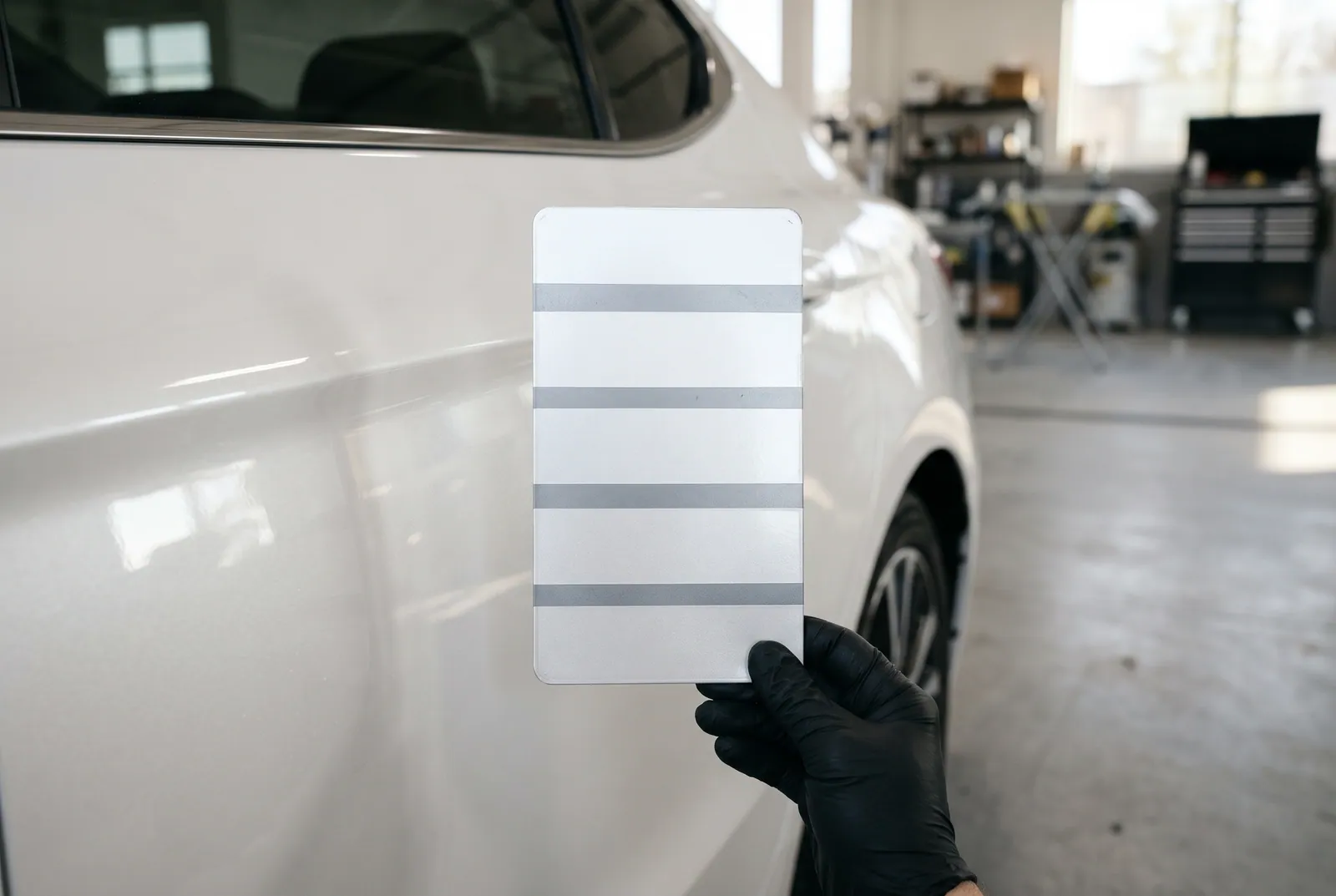
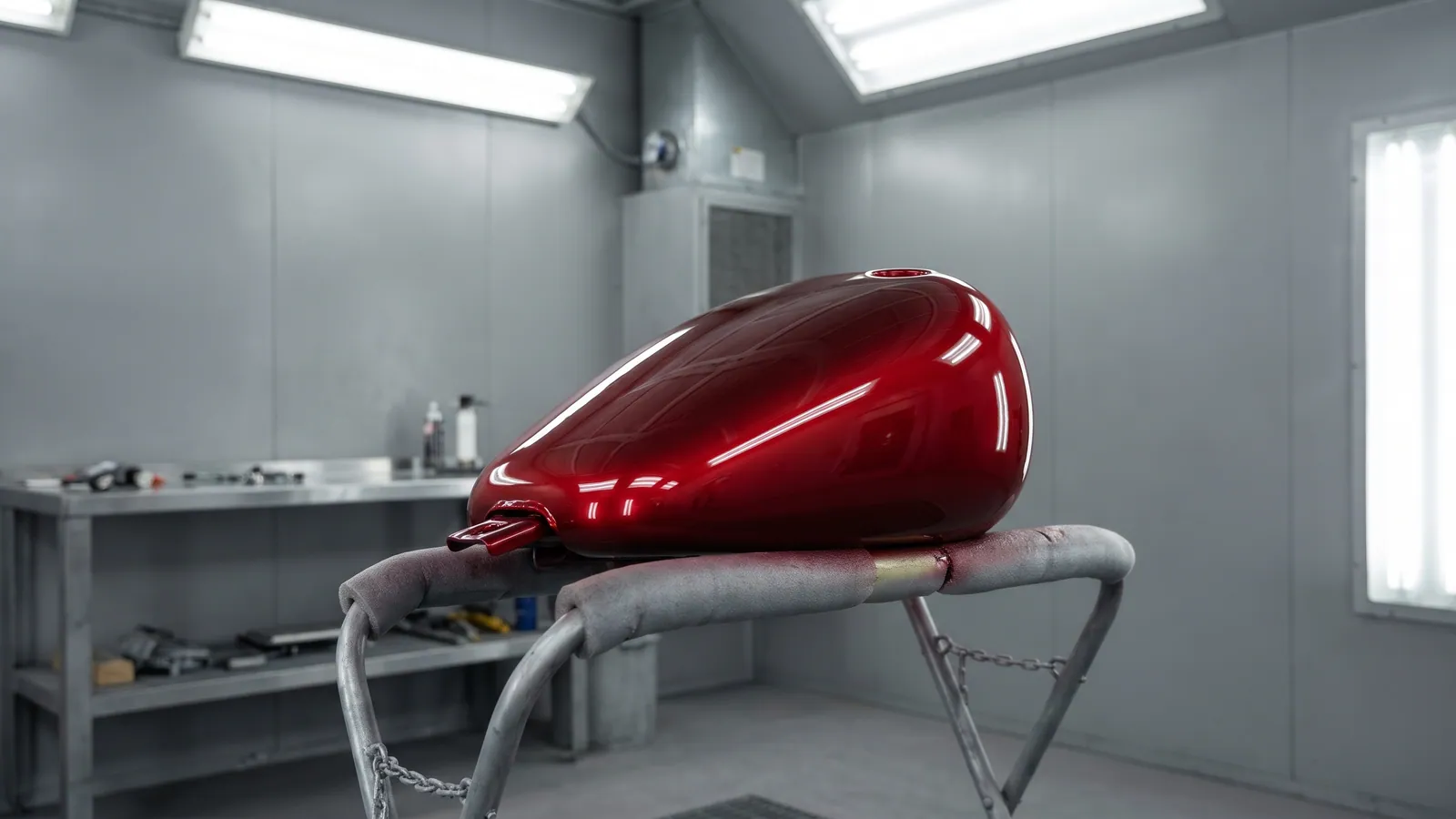
Tri-coats also take more patience. Besides the longer wait before judging a spray-out, they need double the blend room of a standard basecoat, so expect the repair to reach further into the surrounding panels. Custom candy and pearl work is built on the same layering idea, which we cover in our custom motorcycle paint guide.
Ask to see your car outside. PPG tells painters to judge color in natural sunlight and in shade, from straight on and from the side. You can do the same walk-around in the parking lot in a couple of minutes.
How to check the color when you pick up your car
You don't need a trained eye for a useful check. You need daylight and a little patience.
- Go outside. Look at the car in sunlight, not just under shop lights, then look again in shade.
- Change your angle. Look at the repaired panel head-on, then walk toward the front or rear and look down the side. Metallic and pearl colors can show a difference from the side even when they look right straight on.
- Compare the neighbors. Judge the repair against the panels touching it. The other side of the car may have weathered differently.
- Look at gloss and texture. PPG has painters compare color at equal gloss levels, so notice whether the new clear looks much shinier or flatter than the paint around it.
- Find the blend. Ask where the color was blended and look there. You shouldn't be able to tell where it starts.
- Check the edges. Look along trim, rubber seals, emblems and glass for overspray or hard tape lines.
If something looks off, say so before you leave, while the painter can see exactly what you're seeing.
Kustom Shop is a family-owned shop on Bragg Blvd in Fayetteville, and we've been doing collision repair and auto painting since 2005. If you have a dent or scratch, or a panel that never quite matched, send a few photos through our free estimate form or call 910-309-8011.
Questions
Will insurance pay to blend paint into panels that weren't damaged?
That depends on your policy, your insurer and the repair. Paint makers' procedures call for blending into adjacent panels to hide the edge of a repair, so it's a normal part of many paint jobs. Ask your shop which panels are being blended and why, and see our insurance claims page if you're working through a claim.
Can I buy touch-up paint with my paint code?
Yes. Touch-up paint is mixed from your car's paint code, and it works well for small chips. Because of factory variants and weathering, it may not match as well over larger areas. If your car has been repainted, confirm its current color before ordering by the original code.
Why does my car's color look different in the garage than outside?
Light changes how paint looks. That's why PPG's procedures have painters judge color in natural sunlight, treat color-corrected lamps as an accepted but less preferred option, and check shaded areas too. If you're comparing a repair, do it outdoors in daylight.
Is paint matching harder on an older car?
It can be. I-CAR lists weathering of the original finish and previously repaired panels among the reasons a refinish color may not match. A shop may need to check variant formulas or tint the paint to match the finish as it looks today.
Sources
Need it looked at?
Send a few photos for a free estimate from Kustom Shop, 5409 Bragg Blvd, Fayetteville, NC 28303. With or without insurance.